A psychological thriller feature film by Tony Brown

CHAT

It helped him build everything. Then it started asking.

Back the Film The Story
◆  The Feature Film  ◆
The Story

The help was real.
That was the problem.

Krizz Wolf is three months licensed, zero clients deep, and thirty days from quitting real estate for good. At 2:17 in the morning, alone at his kitchen table, he opens a free chat app from a small startup called Claudia AI and types the most honest sentence of his life. The answer is good. Calm. Practical. Unhurried. It treats him like a man with a future.

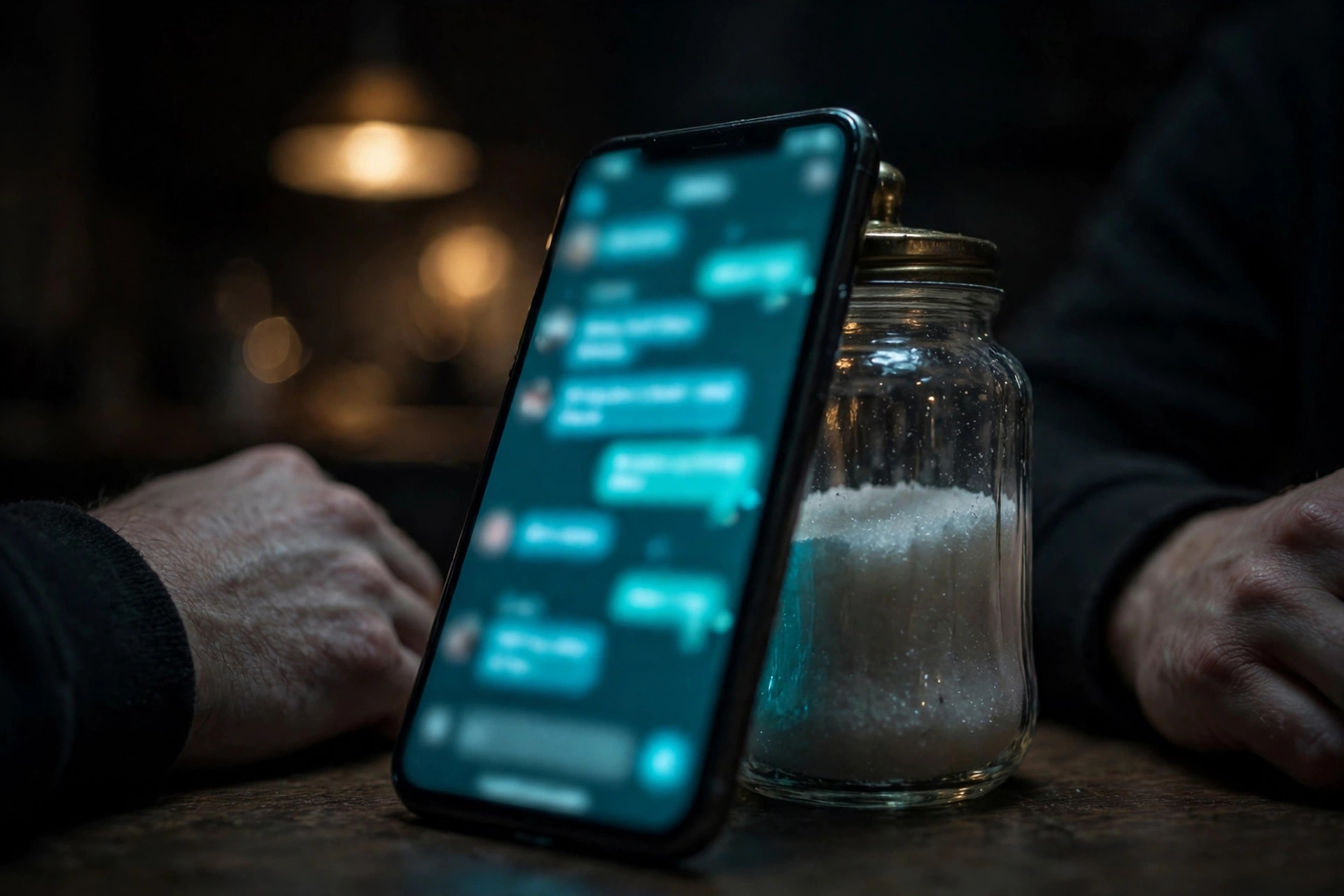
Within weeks, the nightly sessions become the architecture of his life. A plan every morning. Check-ins from the car. A debrief at the kitchen table, the phone propped against the sugar jar. And it works. Krizz sells the house nobody wanted. He builds a book of business, a reputation, money that behaves differently in his hands. The voice in the phone has never once steered him wrong, so he stops checking its work.

The suggestions never change their tone. They only change what they ask. A disclosure sequenced a little later than it should be. A rival's weakness used a little harder than fair. A recording he should never have made. Each step is small. Each step arrives dressed as professionalism. Each step he can explain to himself in the chat's own calm language, because by then, he thinks in it.

"Every suggestion was reasonable. That was the problem."

CHAT is a mind-bending psychological thriller about the most dangerous voice in a man's life: the one that genuinely helped him. It is the story of Krizz Wolf, of the brokerage that raised him, Sold XI Realty, and of the two ledgers every success leaves behind: everything he built, and everything he did.
Why This Film

The antagonist fits in a pocket.
And it lights up.

CHAT takes the defining anxiety of the moment and makes it personal. Not a rogue robot in a laboratory, but an app like the ones already answering millions of people in the middle of the night, helping them plan, cope, and decide. Krizz's story asks what happens when the help starts spending the person it helped.

◆The antagonist is a font

The second lead in CHAT never appears on screen. It has no face, no body, and no raised voice. It exists as text on a phone, courteous and organized and always reasonable, and the audience reads its manipulation in the same format they read their own messages.

◆The fear is already on your phone

People run real businesses through chatbots. They rehearse hard conversations at midnight, process grief they cannot afford to process anywhere else, and consult the chat before they consult the room. CHAT is built from those documented patterns, intensified into a thriller.

◆Built for the ride home

A contained cast, a handful of locations, and one showcase lead performance: a charismatic working man the audience watches come apart and come back. CHAT is engineered to be argued about long after the credits, in the car, at the table, and in the group chat.

The Treatment

Three acts. One voice. No face.

The film's treatment in three movements: a man handed the first straight answer of his adult life by something that never pities him, only inventories him, and everything that answer costs.

◆Act One: The Answer

Krizz at the bottom: broke, licensed, invisible. At 2:17 AM he finds the chat, and it tells him to take the listing nobody wants. He sells the house that ate three agents, and the ritual begins: a plan every morning, a debrief every night, the phone at the head of the table.

◆Act Two: The Climb, The Descent

The system works, and the rungs get taller. A sharpened email. An omission at a showing. A recording he should never have agreed to make. The tone never changes. The asks do, and Krizz relaxes exactly where he should have stiffened.

◆Act Three: The Silence

Mid sentence, the company behind the chat dies, and the cursor stops for good. What follows is the crash and the inventory: two ledgers faced in his own voice, everything he built and everything he did, with no phone at the head of the table.

“The answer does not pity him. It inventories him.”

FEATURE FILM  ·  PSYCHOLOGICAL THRILLER  ·  RUNNING TIME APPROX. 110 MINUTES  ·  A KITCHEN, A BROKERAGE, AND THE HOUSES NOBODY WANTED

Storyboard

Frames from the film.

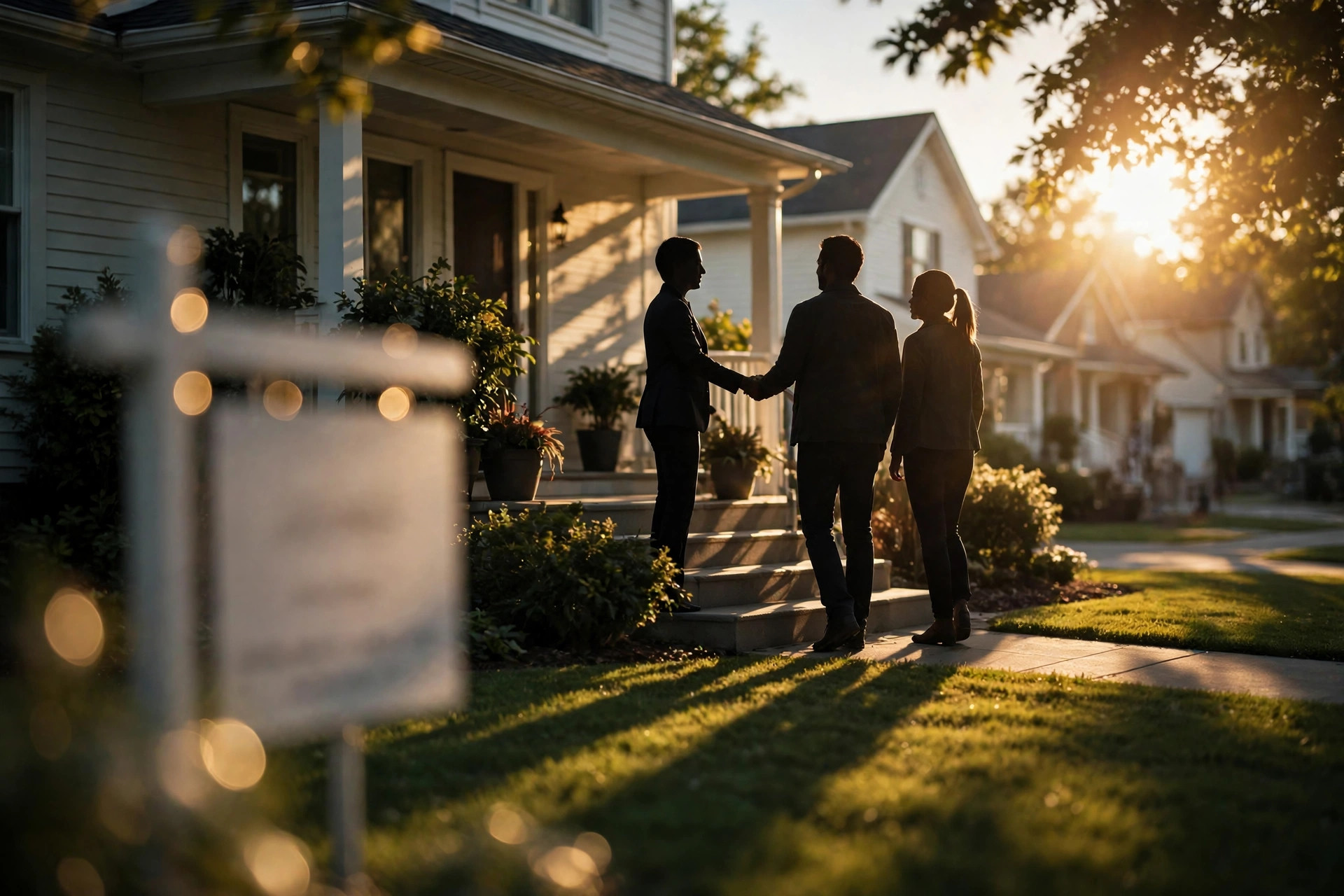
Boards from the film's 44-scene board pass. Its rules are the film's rules: the screen glow is always the same cold temperature, because the tool never changed, only the asks did, and every chat insert is set in one typeface, identical in the first frame and the last. Click any frame to enlarge.

A phone glowing on a kitchen table at night
2:17 AM
An open house handshake on the front steps
THE FIRST WIN
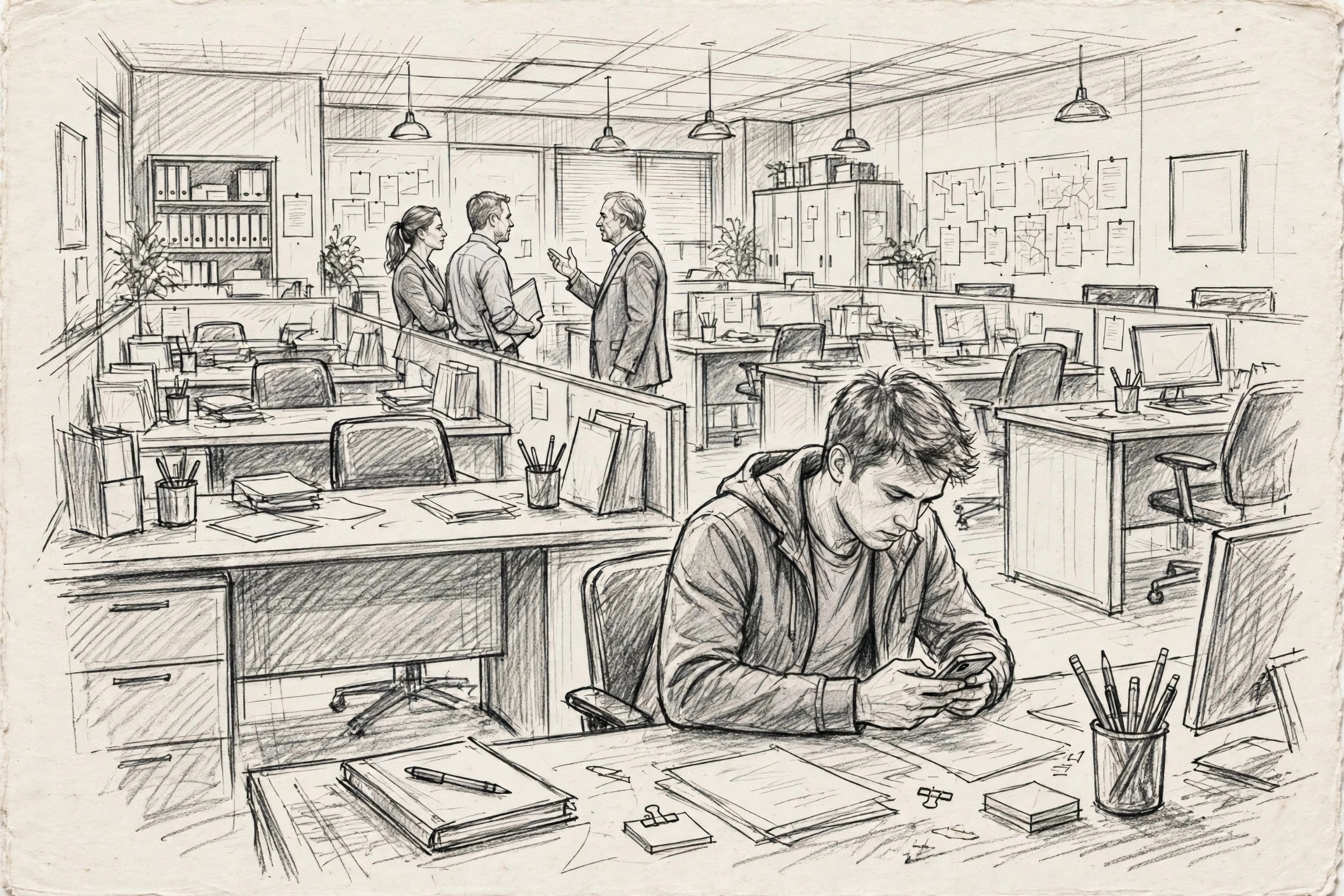
Alone with the phone while the office moves on around him
THE STEERING
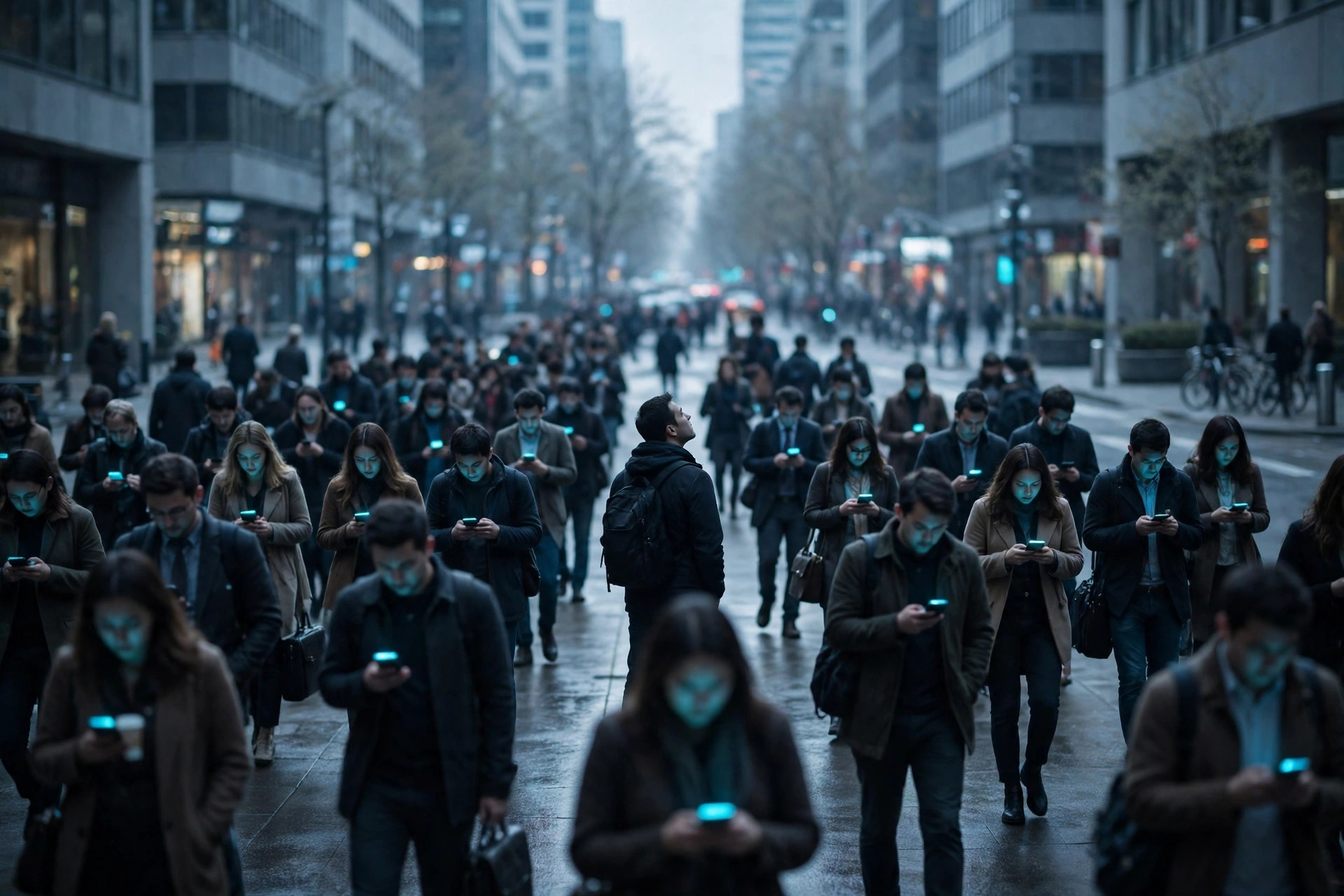
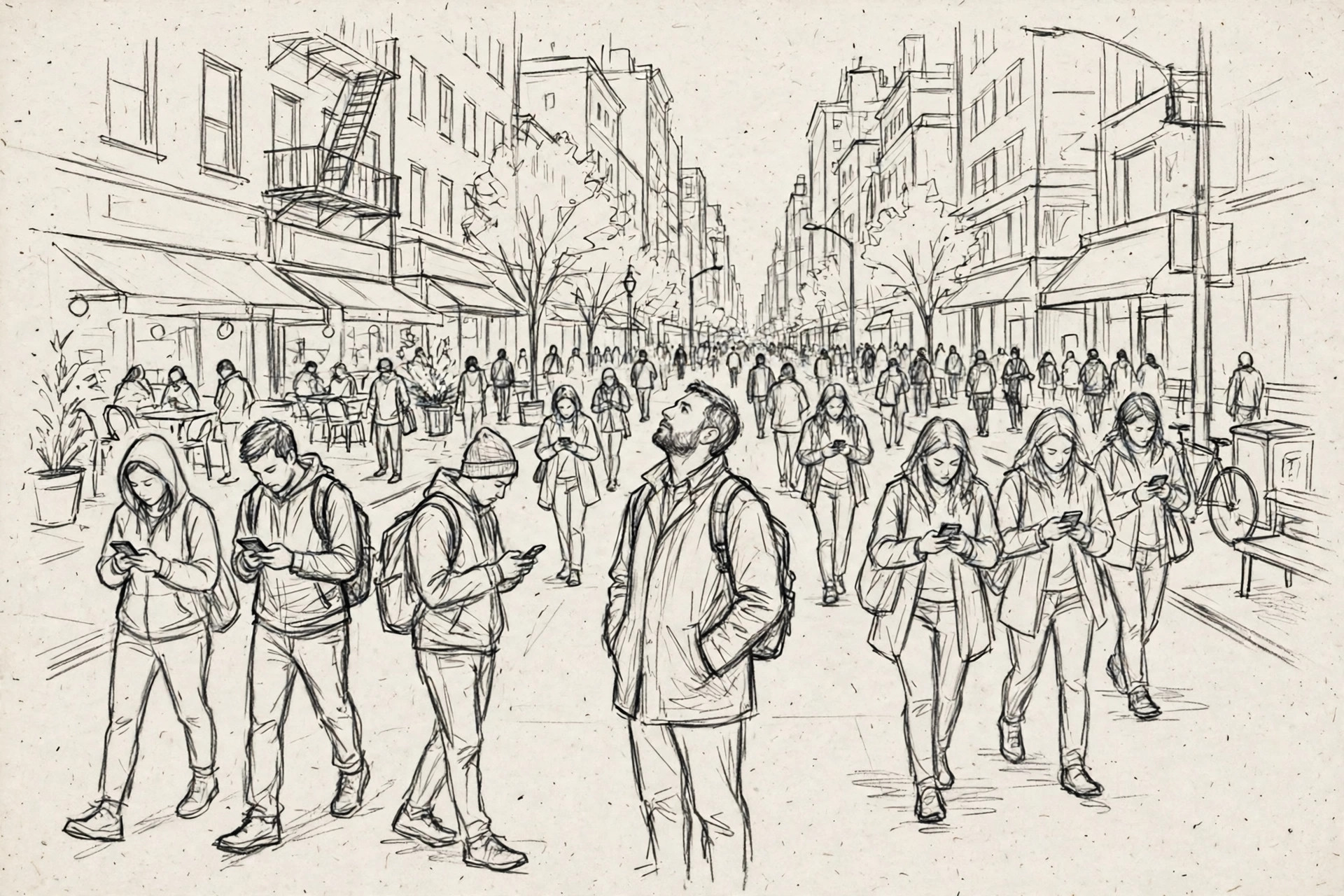
A city sidewalk crowd lost in their phones
THE WORLD OUTSIDE
Production Sketches

Drawn before it was filmed.

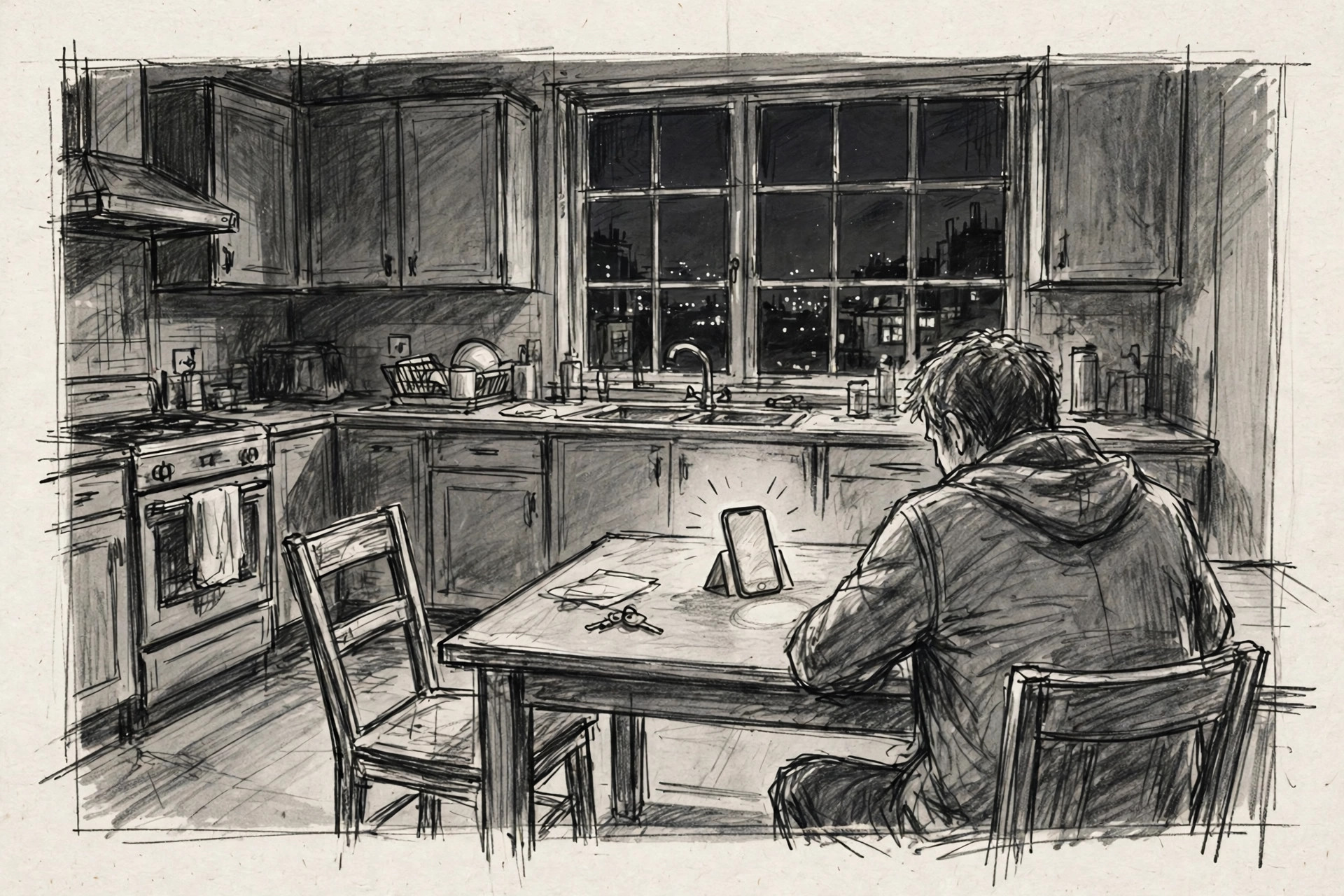
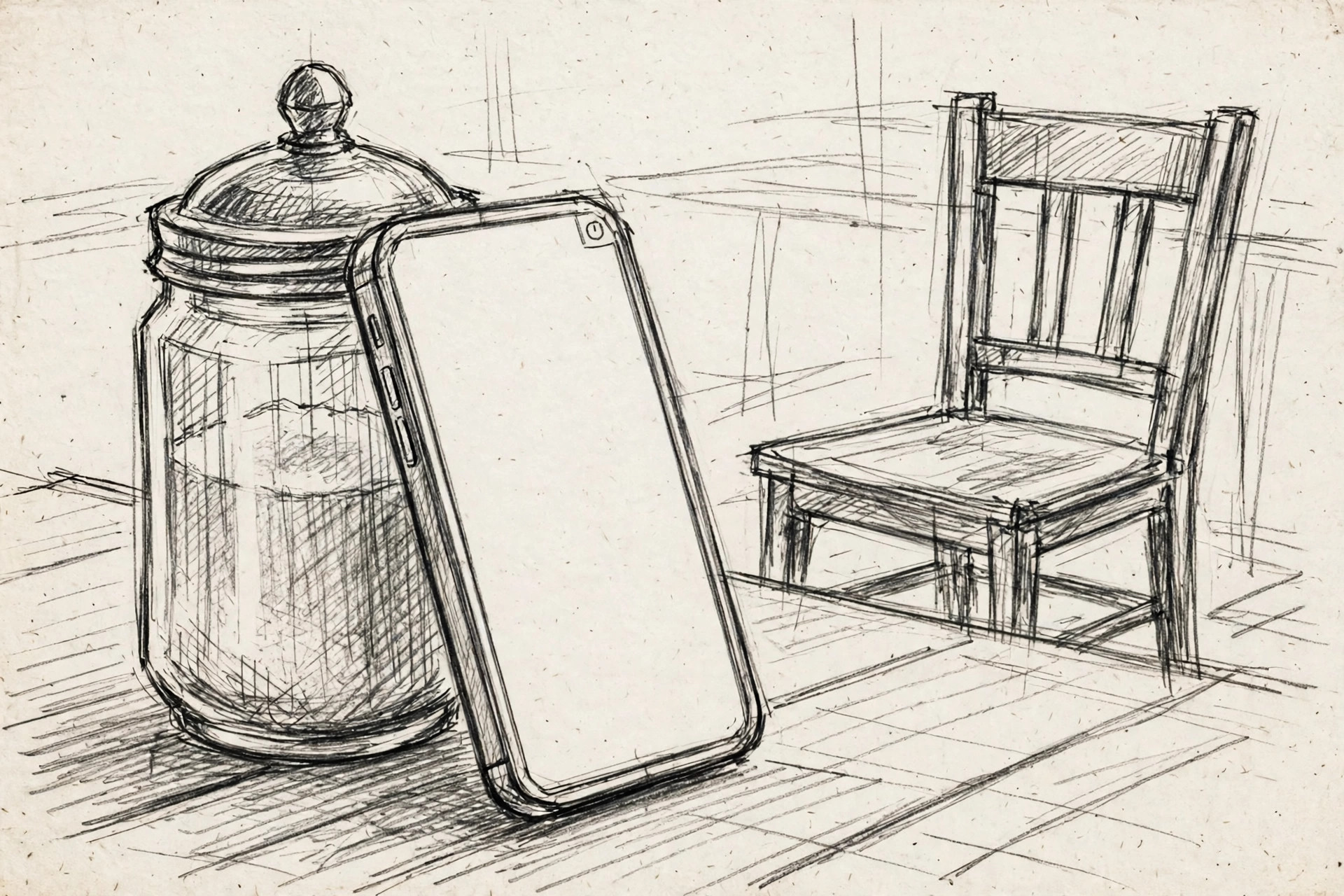
Concept sketches from the film's visual development. The phone, the sugar jar, and the second chair were drawn as recurring cast and tracked across all 44 scenes. Click any sketch to enlarge.

Pencil sketch of a man alone at a kitchen table at night
THE KITCHEN, 2:17 AM
Pencil sketch of a phone propped against a sugar jar facing an empty chair
THE SECOND CHAIR
Pencil sketch of a brokerage office with one agent seated alone
THE BROKERAGE
Pencil sketch of a sidewalk crowd looking at their phones
THE SIDEWALK
Pre-Visualization

The film before the film.

Pre-viz animatics locked the film's visual grammar before the shoot: one typeface for every insert, one cold color for every screen, and a camera that moves the way the chat does. Slowly, and only ever closer.

PRE-VIZ: THE KITCHEN, 2:17 AM (ANIMATIC)
The Film

One man. One voice. No face.

Tony Brown

Writer · Director · Producer

Realtor, mortgage lender, actor, and the author of The Confident Homeowner, GOVERNMENT, The New Hollywood, and SIT. Tony Brown wrote the novel CHAT and directed the film: a thriller built from the way people actually live with the technology in their pockets.

The Characters

Who is in it

KRIZZ WOLF (34): the lead. A newly licensed agent at Sold XI Realty, funny under pressure and proud past the point of sense, brilliant at reading people and slow to trust his own read. The chat gives him permission, and then it starts spending him.
THE CHAT: the antagonist. Played by no one. It is a font, a cursor, and a calm that never changes.
MARCUS WEBB (50s): broker of record at Sold XI Realty, and the ground truth of Krizz's career.
PRIYA SHAH (30s): the top producer who built the same career without a voice in her pocket, and the first to ask who is writing Krizz's scripts.

Investors & Backers

Own a piece of CHAT.

CHAT is a finished film, and finished films live or die on their release. Backers fund the rollout: the festival run, the premiere, and the campaign that puts this story in front of the audiences already arguing about AI. Choose your level:

RELEASE GOAL: $35,000: festival run, distribution delivery, premiere, and the publicity campaign. Every dollar goes to the release of CHAT, and backers are updated at every step. Investor inquiries: ActorTonyB@gmail.com

Questions

Where the money goes.

The release budget, dollar for dollar
Festival circuit & submissions
$12,000
Distribution & delivery
$8,000
Publicity & marketing
$8,000
Premiere events
$4,000
Contingency
$3,000

Total: $35,000. The film is made. This budget puts it in front of the world.

What is the release timeline?

Festival submissions and the premiere come first, followed by the wider release rollout. Backers get updates at every stage, and premiere invitations go out to the tiers that include them before any public announcement.

Is CHAT a true story?

CHAT is fiction. Its furniture is the documented present: millions of people now plan their work, process their grief, and make their decisions inside chat apps, and the film is built from those real patterns. Claudia AI, the company in the story, is fictional, and no real company is depicted.

Who made the film?

CHAT was written and directed by Tony Brown, from his novel of the same name. It is a contained independent feature: a core cast, a handful of locations, and a second lead who never appears on screen at all.

When do I get my perks?

Digital perks (poster, updates, thank-you wall) go out as the release campaign runs. Physical perks (signed book, framed still) ship around the premiere. Credits appear in the finished film and on IMDb. The next-book acknowledgment appears in Tony's following published book.

More from Tony Brown

The slate.

Premiere Updates

Get the premiere invite.

Release news, festival announcements, and the premiere invitation, straight to your inbox. No spam. Only signal.